
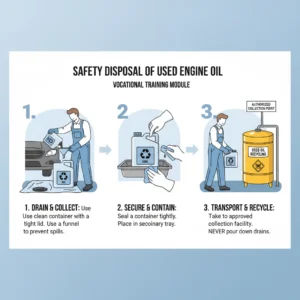
Objective: To understand the environmental hazards of used engine oil and master the professional procedures for its collection, storage, and disposal according to safety standards.
Overview
Used engine oil is not merely “dirty” oil; it is a complex mixture of hydrocarbons, chemical additives, and heavy metals. During engine operation, oil is subjected to high temperatures and pressures, leading to the accumulation of contaminants such as lead, zinc, arsenic, and benzene.
If handled or disposed of improperly, used engine oil poses a significant threat to the environment and human health. A single gallon of used oil can contaminate one million gallons of fresh water. As a professional Diesel Mechanic, it is your responsibility to manage this hazardous waste with technical precision and environmental stewardship.
Key Technical Points
1. Collection and Handling
Drainage: Always drain oil when the engine is warm (not hot) to ensure lower viscosity, allowing the oil to flow freely and carry away suspended contaminants.
Specialized Equipment: Use a dedicated oil drain pan or a mobile waste oil suction unit to prevent spills on the workshop floor.
Avoid Contamination: Never mix used engine oil with other workshop fluids such as antifreeze (glycol), brake fluid, or solvent cleaners. Mixing these makes the oil non-recyclable and increases disposal costs.
2. Storage Protocols
Approved Containers: Store used oil in leak-proof containers made of high-density polyethylene or steel. Ensure the lids are tightly sealed.
Secondary Containment: Place storage drums on a spill pallet (secondary containment) to catch any leaks or overflows.
Labeling: Every container must be clearly labeled as “USED OIL”. This is a legal requirement in most jurisdictions to prevent accidental misuse or improper disposal.
Shelter: Keep containers in a well-ventilated area, protected from rain and extreme heat to prevent pressure buildup.
3. Professional Disposal and Recycling
Registered Collectors: Only transfer used oil to authorized hazardous waste management agencies or certified oil re-refiners.
Waste Tracking: Maintain a logbook of the volume of oil collected and the date of pickup by the disposal agency. This is essential for workshop audits and compliance.
Re-refining: Used oil never wears out; it only gets dirty. Professional recycling facilities can re-refine used oil into high-quality base stock for new lubricants.
Safety Notes and Personal Protection
Personal Protective Equipment (PPE):
Always wear nitrile gloves. Used engine oil contains carcinogens that can be absorbed through the skin, leading to long-term health issues like dermatitis or skin cancer.
Wear safety goggles to protect eyes from splashes during the draining process.
Use oil-resistant boots to prevent slips in the work bay.
Spill Response: In the event of a spill, use absorbent granules or “oil-dry” pads immediately. Never hose down an oil spill into the workshop drains, as this leads directly to the sewage system or local waterways.
Hygiene: If oil comes into contact with the skin, wash it off immediately with soap and water. Do not use gasoline or thinners to clean your hands, as these chemicals increase the skin’s permeability to toxins.
Fire Safety:** Used engine oil is a Class B combustible liquid Ensure that fire extinguishers (Dry Chemical or CO2) are readily available near the storage area.
Summary for the Technician
Safe disposal is the final, critical step in the engine service process. By following these protocols, you protect the ecosystem, ensure regulatory compliance, and maintain a professional workshop environment. Remember: “Reduce, Reuse, and Re-refine.”